Part of the complete guide to Queen Elizabeth's leadership style: nine lessons from a 70-year reign.
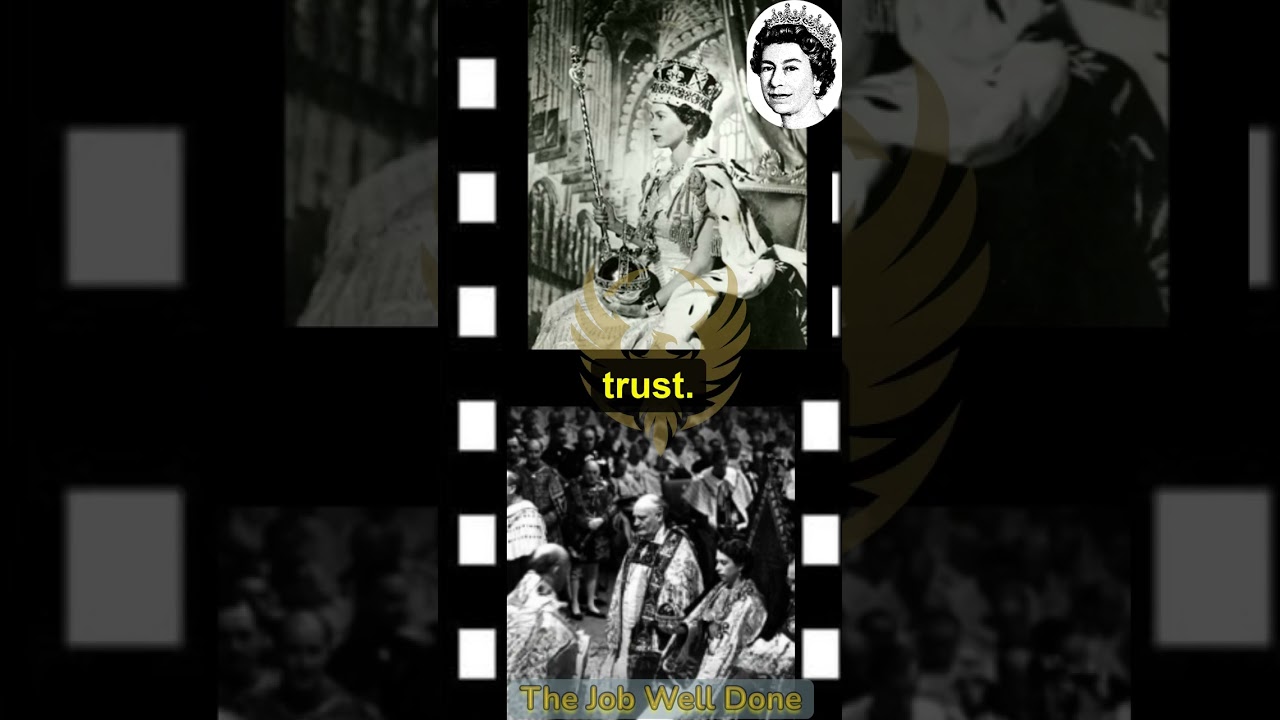
Watch on YouTube · 1 min
There is a treetop in Kenya where history turned.
In February 1952, a 25-year-old Princess Elizabeth was staying at Treetops Lodge, a small observation post built above a waterhole in the Aberdare Forest. She had climbed up a young woman, still a princess. She came down a queen. Her father, King George VI, had died in the night. The throne had passed to her while she slept in the branches of a fig tree in Africa.
Seventy years later, on the 8th of September 2022, Queen Elizabeth II died peacefully at Balmoral Castle in Scotland. That morning, two rainbows appeared simultaneously over Windsor Castle - a rare double arc that people around the world watched in photographs and videos with a sense of something sacred passing through. Thousands gathered spontaneously outside the Palace gates, many weeping for a woman they had never met but felt, somehow, that they had always known.
What kind of leadership creates that response? What does a person have to do - and more importantly, who do they have to be - to earn that kind of grief from people across 15 nations and from every corner of the world?
This is the question I have spent years examining. And the answer, I believe, comes down to a single, radical choice that Queen Elizabeth II made at the beginning of her reign and renewed every single day for 70 years: she chose to lead for legacy, not limelight.
The Weight She Accepted
There was nothing easy about what she inherited. She was 25 years old. She was a wife and the mother of two very small children. She had not expected to be queen - her uncle Edward VIII's abdication in 1936 had thrust the role onto her father, and then onto her - and the world she was stepping into was one of exhausted post-war nations, crumbling empires, and profound political uncertainty.
She could have worn the crown lightly. She could have been ceremonial. She could have been visible when it suited her and distant when it didn't. Many in her position would have. The role would have let her.
Instead, she chose to give everything. At her coronation, she took an oath. And for the rest of her life, that oath was not a formal recitation she had made in public. It was the operating system by which she ran herself.
"My whole life, whether it be long or short, shall be devoted to your service." - Queen Elizabeth II, 1947, at age 21, on her 21st birthday - five years before her coronation
She said that at 21. She meant it at 96.
What Leading for Legacy Actually Means
We talk a lot about legacy in leadership circles, but I think we often misunderstand what it means. Legacy is not about being remembered. It is not about monuments or titles or having your photograph in a boardroom after you leave. Legacy is about what continues to function, to serve, to thrive, because you built it well enough that it outlasts your presence.
Queen Elizabeth II understood this. Her legacy is not the image of her in the crown jewels, though that image is iconic. Her legacy is the 15 Commonwealth nations that chose, after her death, to continue as realms under King Charles - not because they had to, but because 70 years of her patient, respectful, genuine relationship-building had earned that continuation. Her legacy is the Platinum Jubilee celebrations of 2022 that drew millions into the streets not out of obligation but out of something that looked very much like love.
She did not build those things by being present when it was convenient. She built them by showing up, without exception, for seven decades.
The Eagle and the Long View
There is a reason leaders are so often compared to eagles. The eagle flies high enough to see the whole landscape - not just the field immediately below, but the mountain range, the river system, the horizon. It does not fixate on the immediate. It holds the long view.
Queen Elizabeth II led with that kind of altitude. She was not managing the next quarter. She was stewarding institutions and relationships that would need to function across generations. That meant she was willing to absorb short-term criticism for long-term health. She was willing to be misunderstood, to be called remote, to be accused of being behind the times, because she was not optimising for this year's approval ratings. She was optimising for what would still be standing in fifty years.
That is an extraordinarily difficult thing to do in the age of instant reaction, constant commentary, and metrics that measure everything in 90-day cycles. And yet it is exactly what the most enduring organisations need their leaders to do.
I think of her approach when I work with executives who are under pressure to show results immediately. The question I ask is always the same: what are you willing to hold firm on because you know it is right, even when the short-term pressure is to let it go?
She Did Not Lead for Recognition
One of the most striking things about Queen Elizabeth II's leadership, when you study it closely, is how little of it was about her. She gave 21,000 solo engagements over the course of her reign. She met millions of people. She wrote hundreds of thousands of letters, many of them personally. She sat through ceremonial after ceremonial that must, after the five hundredth repetition, have required enormous reserves of genuine interest and attention to perform with grace.
And yet she sought no applause for any of it. She gave no interviews about how hard the job was. She did not write a memoir about the loneliness of leadership or the sacrifices she had made. She simply did the job. Day after day, decade after decade, with a consistency that was not glamorous and was not designed to be.
The legacy that created is not the legacy of performance. It is the legacy of substance. And people feel the difference, even when they cannot articulate it.
What She Taught Us About Succession
One of the greatest tests of any leader's legacy is what happens when they leave. Did the institution need them, or did they build the institution to work without them? Did they hoard authority, or did they distribute it generously enough that the organisation could continue to function?
Queen Elizabeth II prepared for her succession with the same quiet thoroughness she brought to everything else. For years before her death, she deliberately elevated King Charles's public role, stepped back from certain duties, and made visible the transition that was coming. She did not cling. She handed over.
She also, through 70 years of her own behaviour, established a standard so clearly and so consistently that those who followed her would know exactly what the role required. She gave her successor not just a throne, but a template.
This is the mark of a leader who genuinely leads for the institution rather than for themselves. They make themselves replaceable - not because they undervalue what they have built, but because they value it too much to make it dependent on a single person.
The Question Your Legacy Asks of You
I want to ask you a question that I ask every audience I speak to, and that I have turned over in my own life many times since I began writing about the Queen.
If you were to leave your role today - your company, your team, your department, your family, whatever sphere you lead - what would still be standing in ten years that would not have been standing without you? What have you built that is bigger than your presence? What have you given that would have stayed hidden if you had not brought it forward?
That is the legacy question. And it is not a comfortable question, because it asks us to measure ourselves not by what we have achieved, but by what we have enabled.
Queen Elizabeth II's answer to that question is written across the Commonwealth, across the charities she championed, across the institutions she steadied through crises, across the millions of people who felt, when she died, that someone who had genuinely cared about them was gone.
"I have to be seen to be believed." - Queen Elizabeth II
That was her answer to the question of how a leader builds legacy. You have to show up. You have to be present. You have to be consistent enough, across enough time, that people do not just know your name - they trust your word.
Leading Like the Queen
The lessons I have drawn from her leadership across The Job Well Done are not abstract theories. They are concrete, daily practices - the kind of consistency that does not make headlines but does make legacy.
Show up when it matters and when it doesn't seem to matter, because legacy is built in the ordinary moments as much as the extraordinary ones. Hold a standard high enough that those who come after you have something to reach for. Build others up rather than making yourself indispensable. Take the long view, even when the short-term pressure is enormous. And remember, always, that the job is not about you. It is about what you are here to serve.
The woman who climbed that Kenyan tree as a princess and came down a queen spent the next 70 years proving that service, offered consistently and without reservation, is the most powerful form of leadership the world has ever seen.
That is the legacy of Queen Elizabeth II. And it is available to every leader willing to make the same choice.
Discover the nine principles that made the Queen's leadership endure across seven decades.