Part of the complete guide to Queen Elizabeth's leadership style: nine lessons from a 70-year reign.
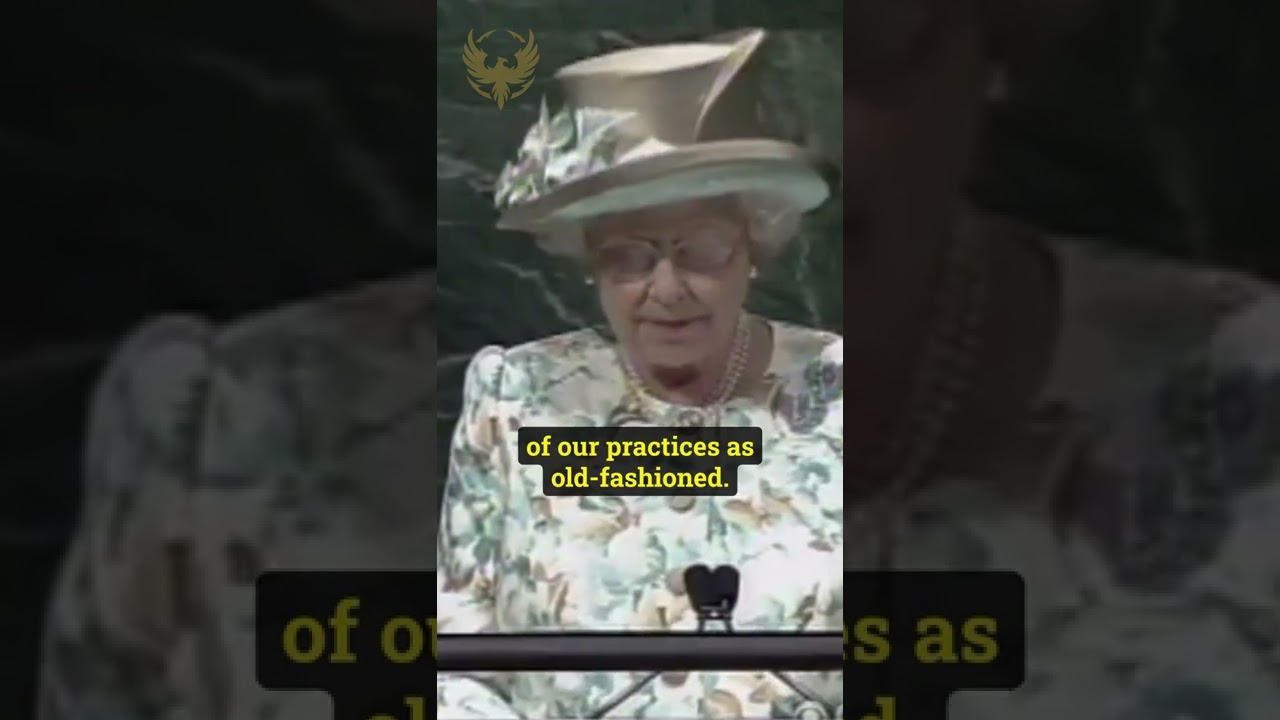
Watch on YouTube · 1 min
One of the questions I am asked most often - after keynotes, in conversations about The Job Well Done, whenever people discover that the Queen has been the central leadership study of my life - is this: but can I actually apply this? Queen Elizabeth II was a monarch. I am a manager, a team leader, a CEO, an entrepreneur. What does her seventy-year reign have to do with my Tuesday morning team meeting?
My answer is always the same: everything. Because the qualities that made the Queen an extraordinary leader are not constitutional. They are human. They are choices, repeated over time, that shape a person's character and their impact on others. And they are available to every leader in every role, at every scale, right now.
Here are the ten principles I draw from the Queen's example - the ones I have found most consistently transformative when I see leaders actually put them into practice.
The Queen signed her Platinum Jubilee message "Your Servant, Elizabeth R." - and she meant it absolutely. The most powerful reorientation a leader can make is to begin each day by asking not what you want to achieve, but who you are here to serve. Your team, your customers, your community - when you name them in the morning, your decisions throughout the day align to something larger than your own interests. This is not a small thing. It is the single most important shift in how you hold your role.
At eighty-nine years old, Queen Elizabeth II completed 341 official engagements in a single year. That level of sustained engagement is not produced by willpower alone - it comes from having so thoroughly aligned your sense of purpose with your daily actions that the work itself becomes an expression of who you are. Ask yourself: beyond the job title and the income, what is this work for? Who does it make life better for? When you can answer that clearly, discipline becomes a natural consequence rather than a daily battle.
In 1981, six shots were fired at the Queen on the Mall. She steadied her horse and rode on. In every crisis across seven decades, she was the steady point - not unmoved, but contained. Your emotional state is the most contagious element of any team environment. When you panic, your team panics. When you hold the centre, you give everyone around you permission to hold theirs. Composure is not performance - it is a practised discipline that you build in the quiet times so it is available in the urgent ones.
Tom Fletcher said of his encounter with the Queen: "When you are talking to her, you are the only person who exists." She met 3.5 million people and offered that experience to all of them. The phone goes away. The laptop closes. You face the person fully. You listen before you respond. This is simple in theory and genuinely difficult in practice, but the return is immediate: people who feel truly heard give more of themselves, more freely, for longer.
The Queen once said, "I am the last bastion of standards." She knew, with complete clarity, which aspects of her role were non-negotiable - the duty, the constitutional dignity, the commitment to the institution above personal preference. When the pressure came, as it always does, she had already decided. Leaders who have not made that prior decision find themselves negotiating with their values in real time, which is where the erosion begins. Decide in advance what you stand for. Write it down. Then hold it.
The Queen oversaw the first televised coronation in history, became the first head of state to send an email, and eventually sent messages to the moon. She adapted continuously to a changing world. Yet she wore the same style of coat for sixty years and maintained ceremonial traditions unchanged across decades. She understood the crucial distinction that most leaders struggle with: what to change, and what never to change. Your values and your core commitments are the anchor. Your methods, your processes, your channels - these must evolve.
The Queen's extraordinary capacity for sustained work was built on genuine renewal, not the destruction of her reserves. Balmoral, her dogs, her horses, her walks - these were not indulgences. They were structural. They were the foundation that made the 341 engagements possible. Most high-performing leaders I meet are gradually depleting themselves without replenishing, and wondering why their capacity is eroding. Rest is not a reward for finishing your work. It is what makes the work possible.
In seventy years, across fifteen Prime Ministers, countless political upheavals, personal betrayals, and public controversies, Queen Elizabeth II never once publicly criticised a single individual. Not one. Her feedback was always private, direct, and delivered with dignity. Her praise - for communities, for public servants, for ordinary people doing extraordinary things - was frequent and public. This is not just good manners. It is a leadership discipline that builds the kind of psychological safety where people bring their genuine best rather than their defended selves.
Four days after Prince Philip died - four days after losing the man who had been her companion for seventy-three years - the Queen was back at work. She received the President of Switzerland. She continued. Showing up when it costs you something is the most powerful signal a leader can send. It tells your people: this matters to me, and you matter to me, and I will not disappear when circumstances are difficult. That trust is built one appearance at a time, in the moments when staying home would have been completely understandable.
When the Oldie of the Year Award committee invited the Queen to accept their accolade, her response was perfect: "Her Majesty believes you are as old as you feel." She returned the honour with grace and wit, redirecting the spotlight elsewhere as she always did. The true measure of leadership is not the recognition it earns but what it makes possible for others. The Queen served fifteen Prime Ministers, 3.5 million people at close quarters, and hundreds of millions more at a distance. She leaves behind not a monument to herself but a standard of service that will be studied for generations. Build for that.
Where to Begin
Ten principles can feel overwhelming when you are looking at them all at once. I always suggest the same starting point: choose one. Just one. The one that pulls at you most strongly, the one where you feel the largest gap between where you are and where you want to be. Work on that one for thirty days. Notice what changes. Then choose the next.
Queen Elizabeth II did not build seven decades of extraordinary leadership by mastering ten things simultaneously. She built it by living the same values, making the same choices, showing up with the same commitment, day after day after day. The compound effect of consistent small choices is enormous. That is available to all of us, in whatever role we hold.
The title means very little. The question is always the same: what kind of leader are you choosing to be today?
Go deeper with all nine dimensions of the Queen's leadership philosophy in The Job Well Done - winner of the Literary Titans Book Award and Goody Book Award 2024.