Part of the complete guide to Queen Elizabeth's leadership style: nine lessons from a 70-year reign.
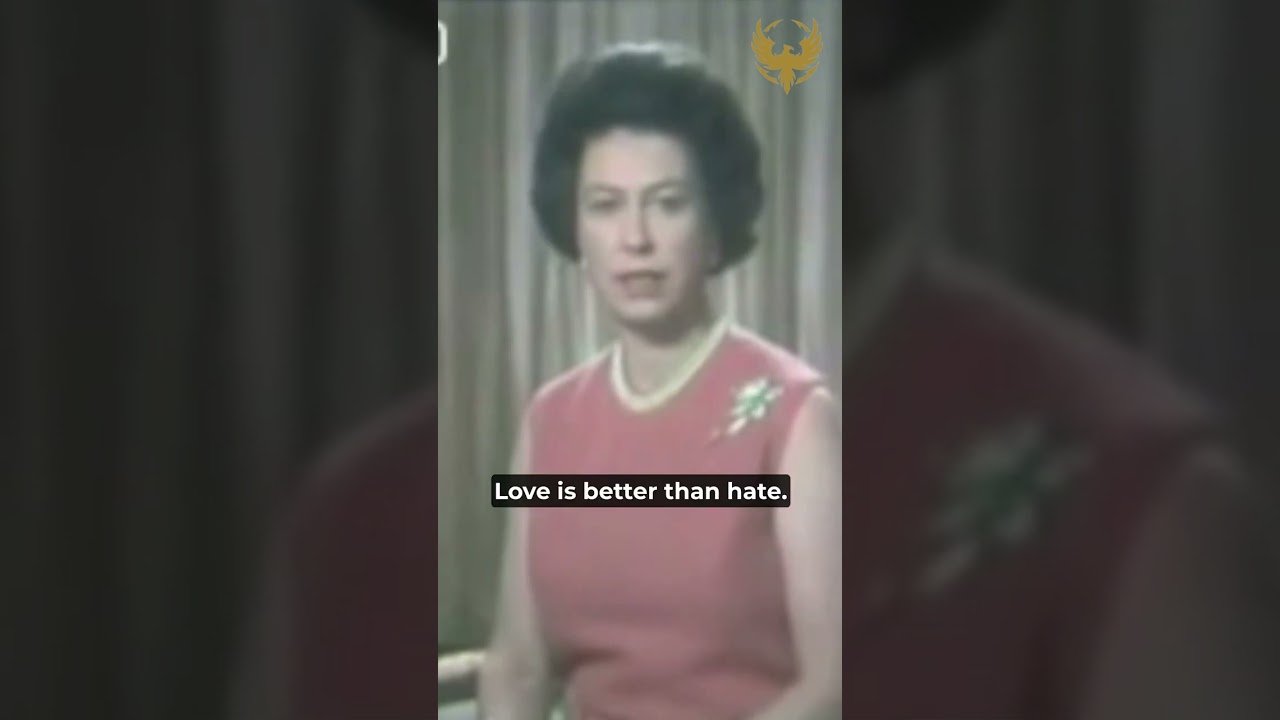
Watch on YouTube · 1 min
There is a description of Queen Elizabeth II that I have returned to more than almost anything else I encountered while writing The Job Well Done. It comes from Tom Fletcher, the British diplomat and author, who met the Queen during an official engagement. Years later, when asked what she was like in person, he said something I find extraordinary given the context: "When you are talking to her, you are the only person who exists."
Think about what that means. Here is a woman who, over the course of her reign, met and personally engaged with an estimated 3.5 million people. Heads of state, prime ministers, community volunteers, schoolchildren, veterans, artists, athletes. Millions of individuals across seven decades of public life. And person after person, encounter after encounter, the experience was the same: she made you feel as though, in that moment, you were her only concern in the world.
That is not a small thing. That is, in fact, one of the most powerful things a human being can offer another human being. And it is becoming vanishingly rare.
Why Presence Has Become the Rarest Leadership Quality
I speak about leadership across many different industries and contexts. And in almost every room I walk into, I find the same invisible epidemic: leaders who are physically present but mentally somewhere else entirely. They are in the meeting, but they are also checking the messages arriving on the phone face-down on the table. They are in the conversation, but they are composing their next response before the other person has finished their current sentence. They are nodding, but they stopped genuinely listening three minutes ago.
This is not malice. It is the entirely understandable consequence of living in an environment of infinite competing demands, where the next thing is always already arriving before the current thing is finished. But the cost is profound, and most leaders have no clear sense of what it is costing them, because the damage is invisible. Nobody sends you a memo saying: "I did not feel heard in our meeting today, and as a result I have quietly reduced my investment in this organisation by fifteen percent." They simply withdraw, gradually, imperceptibly, until one day you notice they are not quite as committed as they used to be, and you cannot identify the moment it changed.
True presence is not a technique. It is a decision - a deliberate, renewable commitment to give the person in front of you the full weight of your attention.
The Queen's Presence as a Leadership Practice
What the Queen offered was full presence, and she offered it consistently across millions of encounters. The mechanism by which she achieved this is worth understanding, because it was not accidental. It was disciplined.
The Queen prepared. Every engagement was briefed - she knew who she was meeting, what they did, what mattered to them. That preparation meant she arrived at every conversation with context, which made genuine interest far easier to sustain. She was not trying to understand someone from scratch; she already had the framework. She could go straight to the particular, the specific, the human detail that makes a person feel recognised rather than processed.
She listened with her whole body. Observers consistently noted that the Queen's physical engagement was complete - she faced you fully, her attention was stable and unfragmented. There was no restless scanning of the room, no premature movement toward the next person in the line. You had her, and you knew it.
And she asked questions. Not the performative questions that are really just a brief pause before you say what you wanted to say anyway, but genuine questions - the kind that could only be asked by someone who was actually listening to what had just been said. Questions that invited the other person deeper into their own experience, that said: your story matters to me, and I want to hear more of it.
Mahatma Gandhi and the Politics of Care
Mahatma Gandhi's entire political philosophy was built on a foundation of genuine care for human welfare. His concept of sarvodaya - the welfare of all - was not an abstraction. It expressed itself in the direct, personal attention he gave to the people around him, particularly those who had been ignored and dismissed by power for generations. He sat with them. He listened to their specific suffering. He treated their particular dignity as the point, not as a means to a political end.
The result was a form of leadership that was not primarily organisational or strategic - it was relational. People followed Gandhi because they genuinely felt that he saw them, that their lives were real to him in a way that most powerful people's lives are not real to the powerless. That is the alchemy of compassionate presence: it transforms the transaction of leadership into the relationship of leadership, and relationships sustain commitment in ways that transactions never can.
The Queen had something of the same quality, operating in a very different context. The scale of the Commonwealth, the formality of royal protocol, the impossibility of genuine depth across 3.5 million meetings - none of these things prevented her from offering the experience of being genuinely seen. Because genuine presence is not about depth of relationship. It is about quality of attention in the moment. And quality of attention is a choice that can be made regardless of context.
Compassion as Strategic Strength
I want to address directly something I encounter regularly in leadership conversations: the idea that compassion is a "soft" quality, something admirable in principle but essentially peripheral to serious leadership. This belief is not just wrong. It is dangerously wrong, and it is costing organisations enormous amounts of human potential and organisational effectiveness.
The research on compassionate leadership is now substantial and consistent: leaders who are perceived as genuinely compassionate have teams that are more engaged, more creative, more willing to take the intelligent risks that drive innovation, and significantly less likely to leave. Compassion, expressed through genuine presence, through attentive listening, through the willingness to understand someone's actual experience rather than the version of it that is most convenient for you - this is not a nice-to-have. It is a core driver of performance.
The Queen's compassionate presence was not incidental to her effectiveness as a leader. It was central to it. It was the mechanism by which she maintained genuine connection to the millions of people she served, across seventy years and every kind of cultural and historical context. It was the practice that made her trust-worthy in the most literal sense: worthy of being trusted with real things, real concerns, real hopes.
The Practical Application: Single-Tasking the Conversation
When I share the Tom Fletcher story in my keynotes and in The Job Well Done, I always follow it with the simplest possible practical challenge: in your next conversation with another person, let them be the only person who exists.
Put the phone away. Not face down on the table - away, out of sight. Close the laptop. Turn your chair so you are facing them fully. Stop formulating your response while they are still speaking. When they have finished, take a breath before you reply - not a performative pause, but a genuine pause, enough to actually absorb what was just said before you react to it.
This is not difficult in theory. It is remarkably difficult in practice, because the habit of divided attention runs deep and the pull of competing priorities is real. But the return on investment is immediate and substantial. People notice. They respond differently. The conversation changes quality in a way that both of you can feel, even if neither of you could precisely name what shifted.
Over 3.5 million meetings, the Queen gave the gift of full presence. Not in spite of the volume and the formality and the protocol - but through it, by making the deliberate choice, again and again, to honour the particular human being in front of her. That is what compassionate leadership looks like at scale. And it begins with one conversation, this one, right now, with the person in front of you.
Explore compassion, presence, and all nine dimensions of the Queen's leadership in The Job Well Done.