In 2015, at the age of 89, Queen Elizabeth II carried out 341 official engagements. Thirty-five of them were overseas. The following year she became the longest-reigning monarch in British history, and she did not slow down to mark the occasion.
On 6 September 2022, at 96, she stood in the drawing room at Balmoral, smiling, holding a walking stick, and appointed her fifteenth prime minister. She died two days later.
Queen Elizabeth's work ethic is the most underrated lesson of her reign, because it looks so ordinary. She turned up. She read the papers. She did the job. For 70 years. This article is about why that is harder than it sounds, and why it is the thing most leaders get wrong.
The red boxes
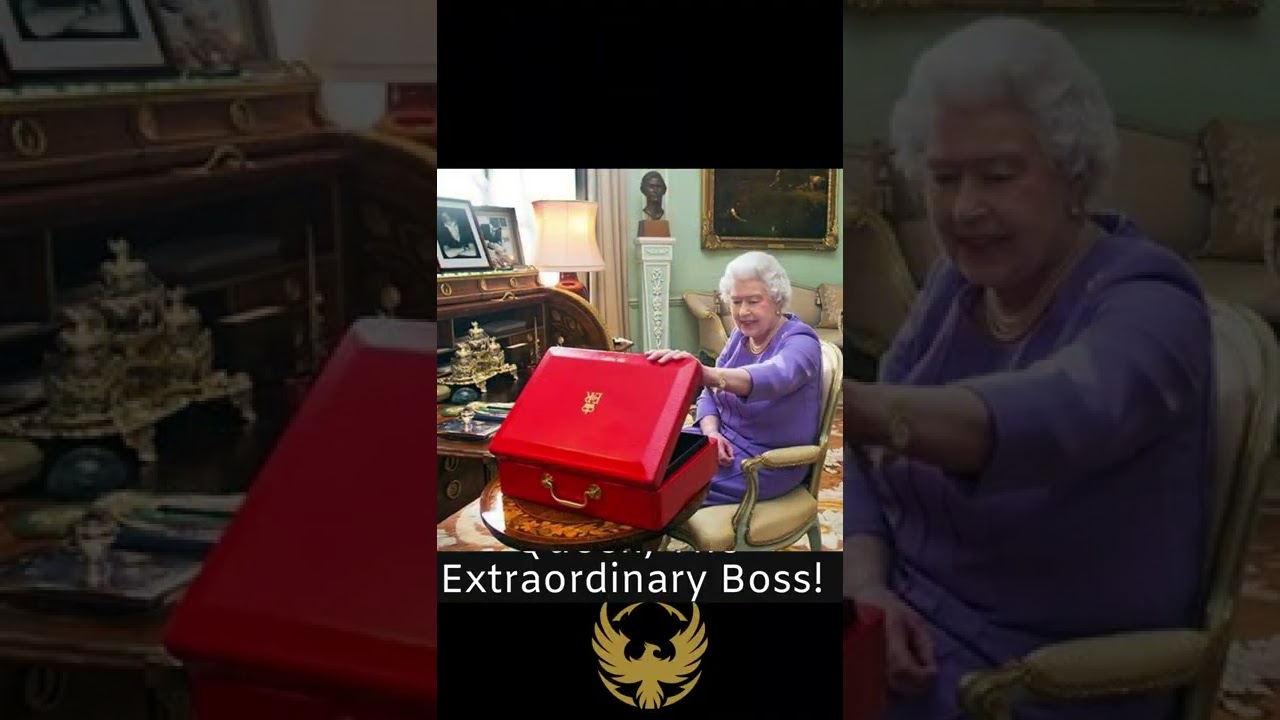
Every working day of her reign, the Queen received red leather dispatch boxes containing government papers, Cabinet minutes, Foreign Office telegrams and documents requiring her signature. She read them. Not skimmed. Read. Prime ministers were regularly caught out at their weekly audience by a monarch who had absorbed a briefing more thoroughly than they had.
That was one job. There were five.
As Head of State she opened Parliament, received ambassadors, hosted state visits at Buckingham Palace and Windsor. As Head of Nation she was the symbol the country gathered around in celebration and in grief, hosting at least three garden parties a year and visiting hospitals, schools, factories and regiments across the country. As Supreme Governor of the Church of England she appointed archbishops and bishops. As Head of the Commonwealth she held together a free association of 56 nations. As Head of the Armed Forces she was the only person who could declare the country at war.
She did all of it, every year, with no sabbatical, no gap year, no stepping back to write her memoirs.
On the day her father died in 1952 she said that she would always work, as he had, to uphold the constitutional government and to advance the happiness and prosperity of her peoples. Then she did exactly that, for seven decades.
Constancy is the product
When the pandemic hit in 2020, the Queen made a rare televised address. She told the country that better days would return, that we would be with our friends and families again, and she borrowed a line from a wartime song: we will meet again.
It landed because of who was saying it. A 93-year-old who had been broadcasting to the same country since she was 14 was telling them this would pass. Her authority in that moment came from nothing except the fact that she had never gone away.
That is the product of a work ethic sustained over decades. Not any single achievement. The accumulated weight of having always been there.
Why it worked
Consistency compounds. Charisma does not.
A leader who is brilliant on Tuesday and absent on Thursday gets remembered for Thursday. The Queen was never brilliant in the way we usually mean it. She gave few memorable speeches. She never gave an interview. She was there, prepared, every single time, and over decades that became the most trusted reputation in the world.
There is a second mechanism. Reading the red boxes every day meant she was never behind. She never had to catch up, never walked into an audience unprepared, never had to bluff. Daily consistency removes the crisis of the backlog. Most leaders live in that backlog permanently.
Watch on YouTube
What you do on Monday
Identify your one red box. The task that, if you do it without fail, keeps everything else on track. For most leaders it is reading: the numbers, the customer feedback, the team's updates. For some it is a specific conversation. Name it.
Protect it in the diary first. Before anything else goes into the week. Thirty minutes, same time each day. The Queen did not read the red boxes when she got round to it. They were the day.
Stop measuring yourself by peaks. The question is not "what was my best week this quarter". It is "how many weeks did I do the basics without fail". Track that instead.
From the book
This is Chapter 2 of The Job Well Done: The Queen's Way to Successful Leadership. The full chapter covers the Queen's five roles in detail, her pandemic broadcast, and other leaders who built results on relentless consistency rather than talent.
Read all nine principles on the Queen Elizabeth leadership pillar page, or get the book.
All nine principles, with the history behind each one, are in The Job Well Done: The Queen's Way to Successful Leadership. Winner, BOOKFEST Book Award 2023 and the Literary Titans Book Award 2024.
Previous principle:
Staying on Course: Queen Elizabeth's sense of duty
Next principle:
Take a Break: how the Queen protected faith, family and Balmoral